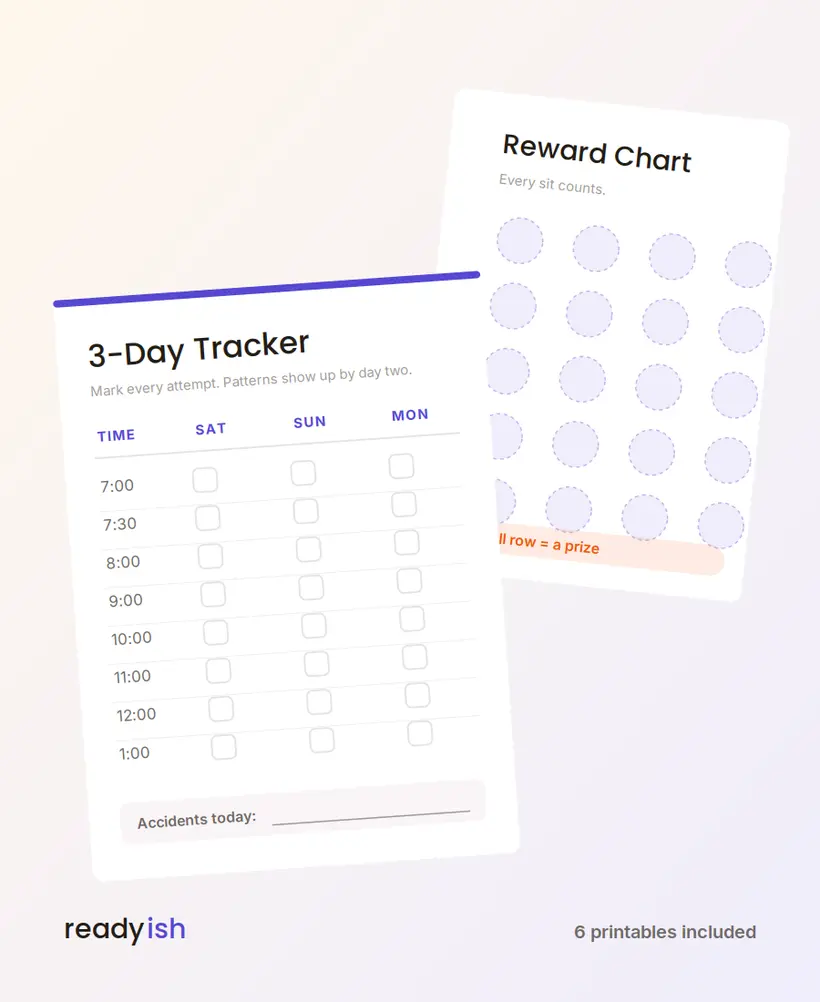
Six questions and an honest answer — including if the answer is “not yet.” Starting at the wrong time is the number one reason potty training weekends fall apart.
No email required to see your result.
You've watched the videos and read the threads at 11pm with the screen dimmed so you don't wake anyone. The little potty has been sitting in the corner of the bathroom for six weeks. And Saturday morning is still a blank page.
Day three is when most toddlers start going on their own. Full reliability — outings, naps, no reminders — usually takes another two to three weeks.
Anyone promising you a permanent finish line by Sunday night is selling you something. This plan includes the two-week follow-through, because that's where it actually sticks.
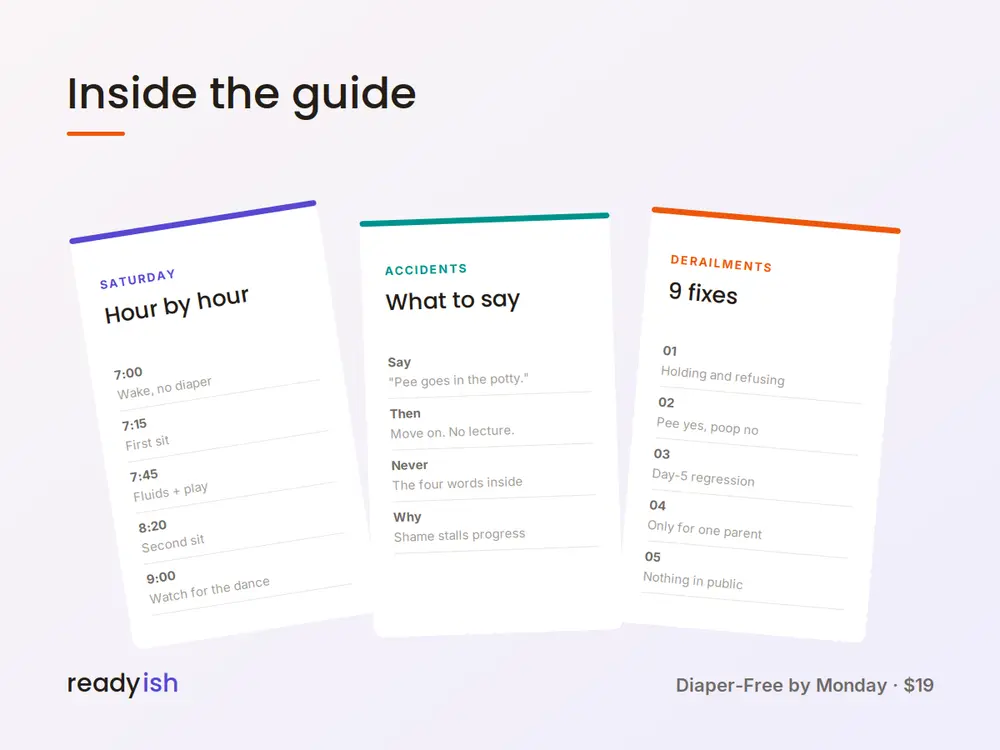
No theory. A sequence, with the words to say at each step.
Language swaps, bathroom familiarity, the underwear shopping trip. By Friday your child thinks this was their idea.
Supply list, floor plan, the last diaper, and a short conversation script that sets expectation without building fear.
Expect accidents. This is the day the plan earns its keep: what to say during each one, and the four words that quietly set you back a day.
Most kids start self-initiating here. You'll know what that looks like, and how not to interrupt it by celebrating too hard.
A short, deliberately boring trip. The car kit, the timing, and the public bathroom script.
You hand over a one-page sheet so their teacher does exactly what you've been doing. Consistency on day four is what makes it stick.
Instant download · Yours forever, including for the next kid
Starting at the wrong moment is the single most common reason these weekends fail. We'd rather you wait than force it.
Every protocol in this guide was reviewed for age-appropriateness and safety. This is educational material for typically developing toddlers and is not a substitute for advice from your pediatrician. If your child has ongoing constipation, pain, or a medical condition affecting elimination, talk to your pediatrician before starting.
Instant download · 30-day money-back guarantee
No questions, no form to fill out. We'd rather refund you than have you white-knuckle a weekend that isn't right for your kid. Just write to [SUPPORT_EMAIL].
The first section is a readiness check. If your child doesn't clear it, don't start — put the guide away and come back in six weeks. Starting too early is the number one reason these weekends fail.
Yes, and there's a specific section for you. A restart needs a different setup than a first attempt, because your child now has an association to undo. Skipping that is why second attempts often go worse than first ones.
The core guide covers daytime, which is the part you can actually train in a weekend. Nighttime is a separate physiological process and it's covered in the Dry Nights add-on, offered at checkout.
No, but it does require daycare to be consistent with you from Monday. That's what the one-page handoff sheet is for. Most centers will follow a clear written protocol.
Most families see daytime self-initiation by day three. Full reliability, including outings and naps, usually takes another two to three weeks — which is why the two-week follow-through plan is included.
About forty minutes, and you only need the first two sections before Friday. It's built to be used on your phone with one hand, standing in a bathroom.
A 47-page PDF plus printables, downloadable immediately after checkout. No app, no login, no subscription. Yours to keep and to use again for a younger sibling.

Pick the weekend. We'll handle the rest of it.
Instant download · 30-day money-back guarantee